NCSC Annual Review 2022
Looking back at the National Cyber Security Centre's sixth year and its key developments and highlights, between 1 September 2021 and 31 August 2022.
Page 30 of 33
Further and higher education
The CyberFirst Bursary programme continues to support the next generation of cyber talent, with a £4,000 bursary to undergraduates and paid cyber security training each summer. This year, a further 85 students joined the bursary scheme with a 42% female intake and 23% from ethnic minority backgrounds.
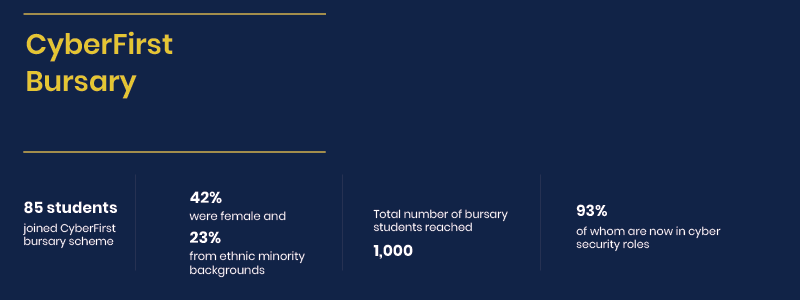
In total, over 1,000 students have benefited from these bursaries, 93% of whom are now in cyber security roles in an industry where the average salary is an estimated £60,000 per year. The bursary scheme and wider ecosystem is now supported by over 200 members organisations from industry, academia and government.
For Higher Education the number of NCSC-certified Academic Centres of Excellence in Cyber Security Education grew to 13. Since its launch in 2020, the ACE-CSE programme, led by the NCSC and DCMS has recognised UK universities with gold and silver awards for showing their commitment to delivering first-rate cyber security education on campus and beyond.
This year saw Cardiff University added to the list of recognised institutions across England, Wales, Scotland and Northern Ireland. ACE-CSE universities continued to play a key role in bringing together stakeholders to develop, shape and support cyber security education to meet the needs of the local population and employers.
The ACE-CSE programme builds on the NCSC’s existing degree certification programme, which helps set high standards of cyber security teaching across higher education as well as helping students make informed decisions about the range of courses on offer at UK universities.
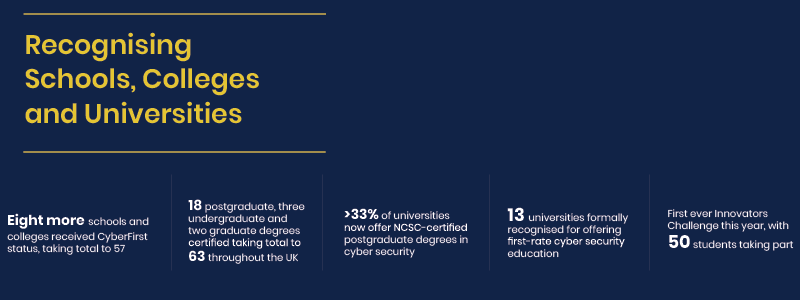
This year, 18 postgraduate and three undergraduate degree courses in England & Wales were NCSC-certified, as well as two Scottish Graduate Apprenticeships. More than a third of UK universities now offer postgraduate degrees in cyber security certified by the NCSC. Overall, a total of 63 degrees from 41 universities throughout the UK have been certified.
Offering an NCSC-certified course benefits institutions by raising their profile and improving the quality and number of applicants. Official data showed that more than half of UK students (52%) pursuing a cyber security-related Master's degree chose an NCSC-certified course.