NCSC Annual Review 2022
Looking back at the National Cyber Security Centre's sixth year and its key developments and highlights, between 1 September 2021 and 31 August 2022.
Page 31 of 33
Innovation and growth
In March, 50 undergraduates and postgraduates studying NCSC-certified degrees took part in the first-ever Innovators Challenge. The three-day event in Manchester tasked the students to work in teams to find innovative solutions to two cyber security challenges facing the UK: securing the supply chain and safe remote working.
The NCSC for Startups initiative continued to translate talent into jobs, opportunities and growth this year. The project, which is delivered between the NCSC and Plexal, in partnership with Deloitte, CyNam, Hub8 and QA, nurtured and advised fledgling cyber security businesses by enabling them to develop, adapt or pilot technology to meet big challenges in the sector.
Over the last year, 14 new organisations were onboarded to the initiative, taking the total number of participants to 62 since the scheme started in 2017. Employee headcounts at businesses which have gone through the scheme increased from 475 to 1210, and investment to date went from £100 million to more than £422 million.
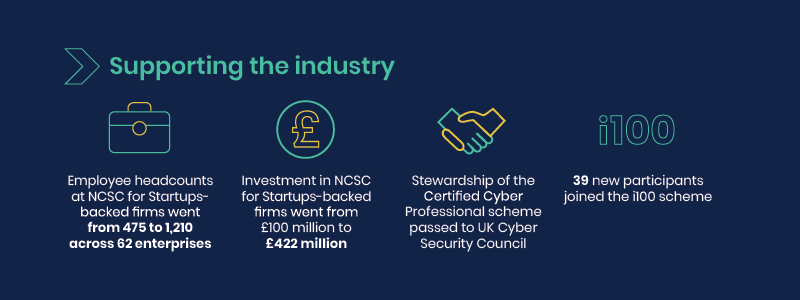
The NCSC’s long-standing i100 (Industry 100) scheme continued to foster collaboration between public and private sector through placements of industry professionals within the organisation. Now in its fifth year, the scheme has seconded 180 industry partners into teams across all areas of the NCSC, with 39 new participants taking up the opportunities in the last 12 months.
Lawyers, analysts and chief technology officers for multinational cyber security companies were among some of the i100 participants who joined NCSC teams on a part-time basis. Like other participants they got an opportunity to work on a range of strategic and tactical activities.