Operational Technology
Page 1 of 37
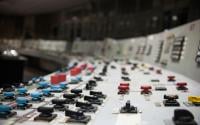
What would life be like without traffic lights, mass-produced food, energy at the touch of a button, or easily available motor fuel?
Operational Technology (OT) makes all these things happen and pervades our lives in both obvious and hidden ways, automatically monitoring and controlling processes and equipment that are too dangerous, too demanding or too monotonous for manual operation.
OT is defined as technology that interfaces with the physical world and includes Industrial Control Systems (ICS), Supervisory Control and Data Acquisition (SCADA) and Distributed Control Systems (DCS).
Where cyber security for IT has traditionally been concerned with information confidentiality, integrity and availability, OT priorities are often safety, reliability and availability, as there are clearly physical dangers associated with OT failure or malfunction. Many businesses strive for improved OT process efficiency and reliability for their customers, which often results in increased connectivity to enterprise technologies and the Internet. This convergence has the potential to increase system vulnerabilities, but can be addressed by adopting sound risk management principles, which are the same regardless of the underlying system type.
Many OT environments form part of the UK’s Critical National Infrastructure, so disruption to services that they control is potentially of concern. The NCSC published guidance to help regulators and operators of essential services adhere to the requirements of the Network and Information Security (NIS) Regulations. This guidance can help OT managers ensure that any connectivity between their OT environments and their wider enterprise networks or the Internet is managed securely.
The NCSC has published cyber security design principles including a supporting case study for OT. This case study aims to assist organisations to navigate unique cyber security issues you will encounter as you design OT solutions. The principles are intended to help architects and designers produce secure and resilient systems.