Supply chain security guidance
Page 11 of 14
Watering hole attacks
A watering hole attack works by identifying a website that's frequented by users within a targeted organisation, or even an entire sector, such as defence, government or healthcare. That website is then compromised to enable the distribution of malware.
The attacker identifies weaknesses in the main target’s cyber security, then manipulates the watering hole site to deliver malware that will exploit these weaknesses.
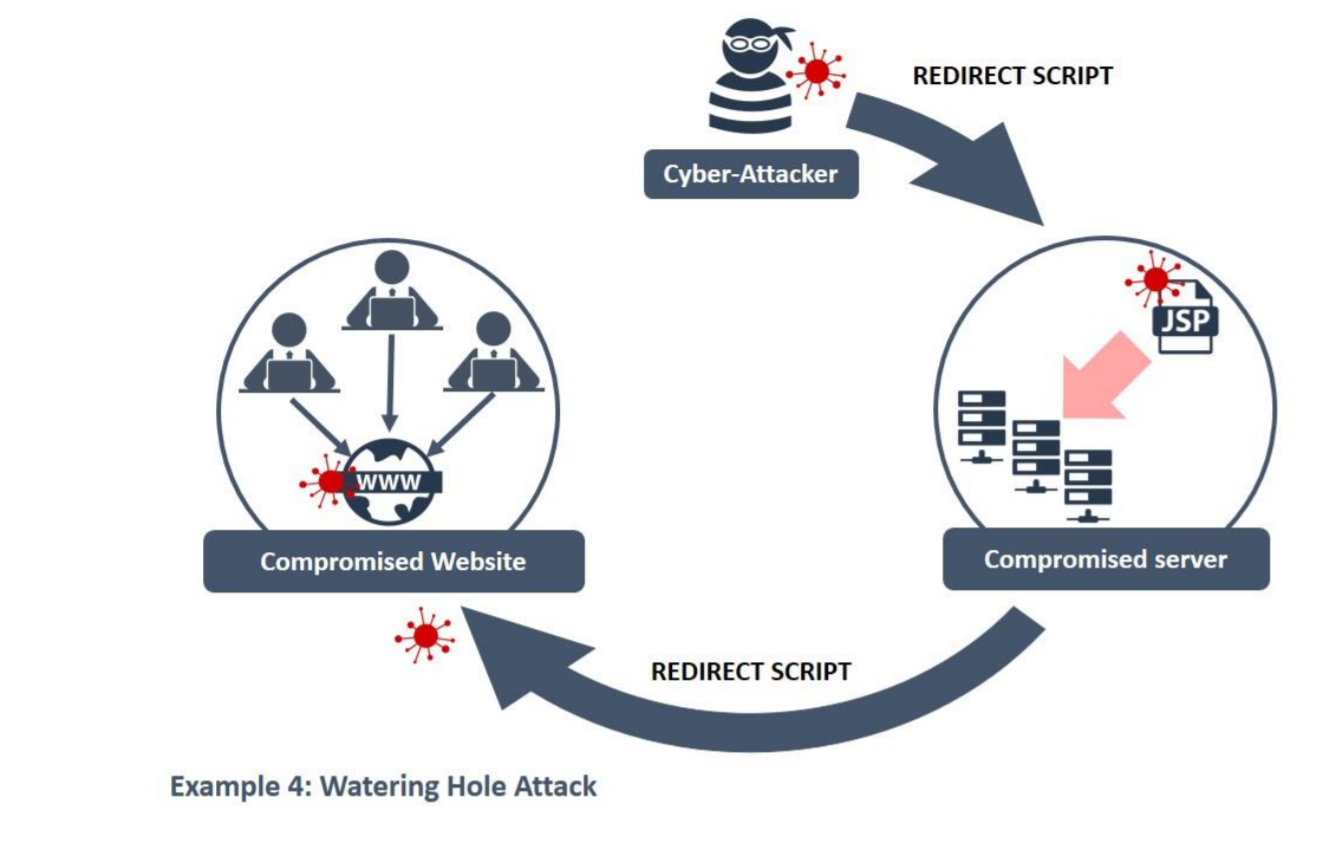
The malware may be delivered and installed without the target realising (called a ‘drive by’ attack), but given the trust the target is likely to have in the watering hole site, it can also be a file that a user will consciously download without realising what it really contains. Typically, the malware will be a Remote Access Trojan (RAT), enabling the attacker to gain remote access to the target’s system.
Attackers are increasingly exploiting ‘watering hole’ sites to conduct espionage attacks against a host of targets, across a variety of industries. The VOHO campaign is a good example of this.